Mobile Fire Fighting Assembly – Helicopter firefighting without ground crew
The Mobile Fire Fighting Assembly (MFFA) is designed to support modern wildfire operations by enabling helicopter firefighting without the need for ground crew. The system can be deployed, relocated, and recovered quickly, while reducing heavy labour, improving safety, and freeing personnel for higher priority tasks.
No ground crew required – Deploy, Drop, Continue Mission
One of the most powerful advantages of the Mobile Fire Fighting Assembly (MFFA) is that it can be deployed and operated without any ground crew on site. In many wildfire operations, manpower and logistics are major limiting factors. Valuable time is often spent transporting, deploying, managing, and recovering heavy equipment in difficult terrain.
The MFFA is designed to remove these bottlenecks. A helicopter can pick up the unit, transport it directly to the required location, and place it precisely where it is needed. Once deployed, the helicopter is immediately free to continue other high-priority tasks such as relocating personnel, transporting equipment, reconnaissance flights, evacuation support, or active firefighting.
Works together with helicopter buckets
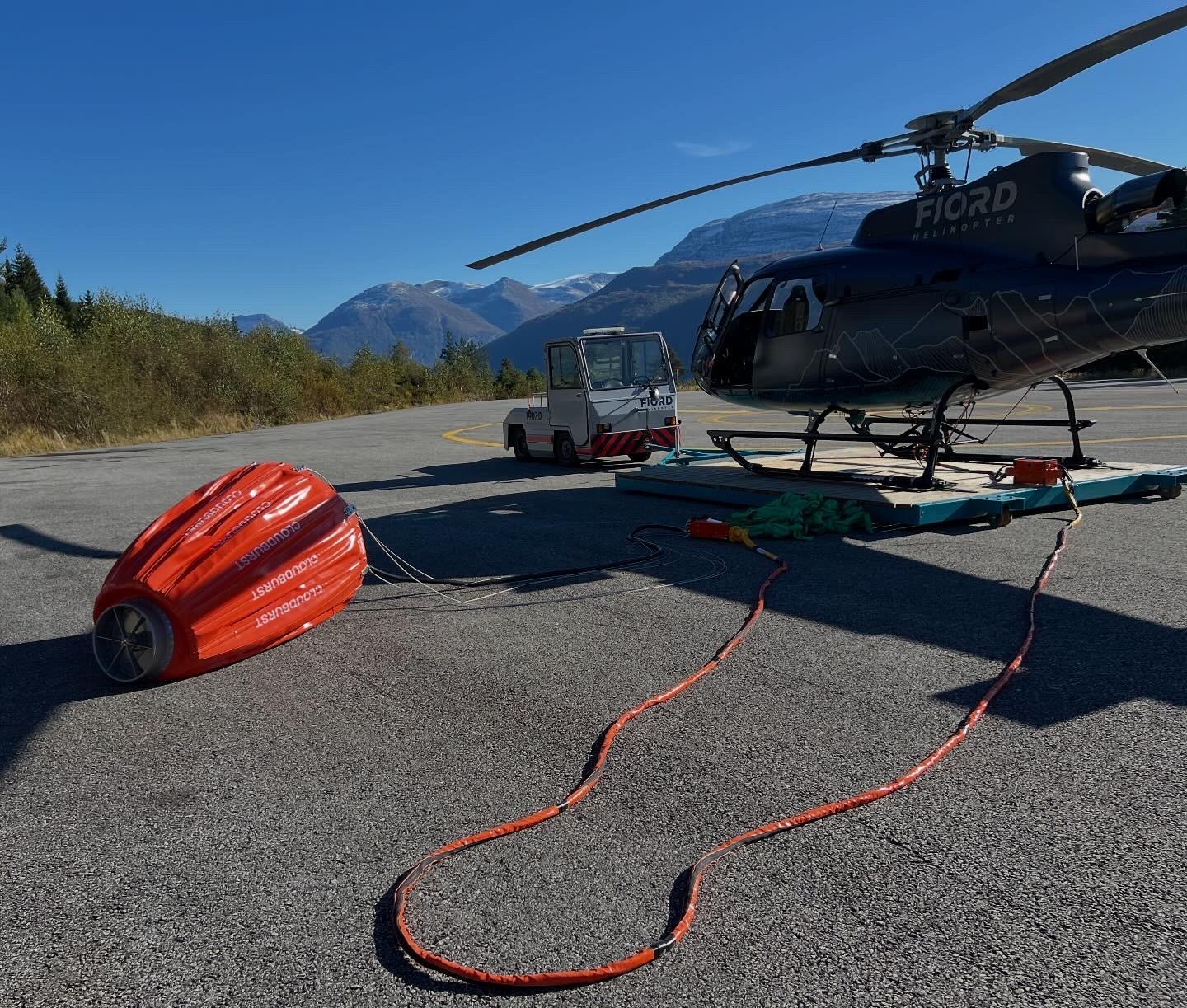
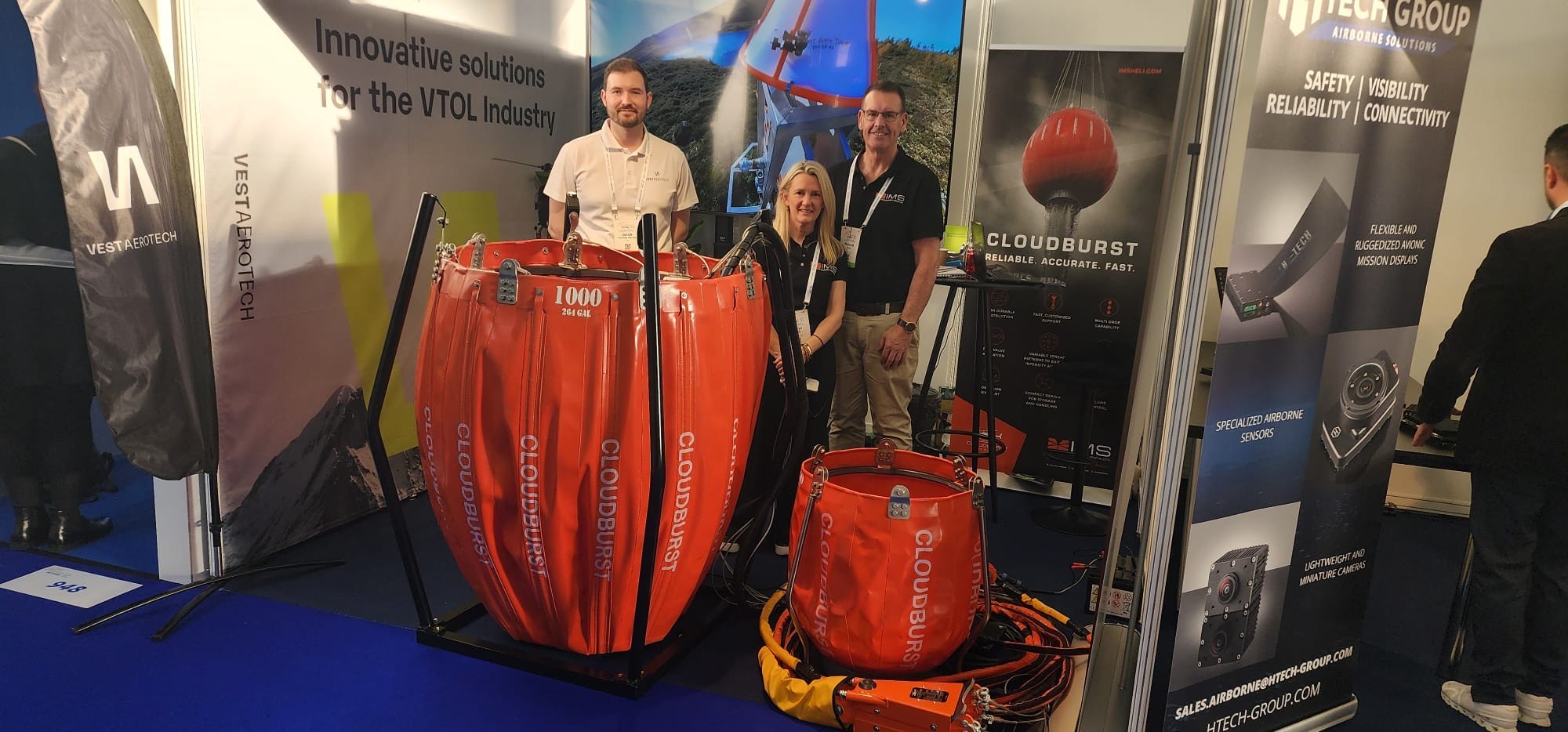
Helicopter bucket operations remain one of the most important tools in wildfire suppression. Buckets such as the Cloudburst Fire Fighting Bucket provide fast, aggressive, and flexible water delivery where immediate impact is required.
The Mobile Fire Fighting Assembly is designed to work alongside these systems. While buckets deliver rapid water drops, the MFFA provides a complementary capability by enabling continuous water delivery through a hose line. This allows sustained cooling and suppression in critical zones while helicopters remain free to continue bucket drops and other missions.
Pre-Positioning before the fire arrives
Wildfires often develop in predictable patterns during high-risk days with dry conditions and strong wind. The MFFA can be staged and pre-positioned in advance near vulnerable areas such as cabins, residential zones, forestry roads, industrial facilities, power lines, telecom installations, remote villages, and island communities.
Pre-positioning equipment improves response time significantly and increases the likelihood of stopping a fire before it grows into a major incident.
Continuous water delivery during active firefighting
Wildfire operations often require both immediate response and long-term suppression. Helicopters can deliver fast water drops, but many scenarios require continuous cooling of fire lines, protection zones, and critical infrastructure.
The Mobile Fire Fighting Assembly supports these operations by providing a powerful remote water cannon system capable of delivering water continuously. This creates long-duration suppression capability, reducing the need for constant re-positioning of ground crews and improving the overall efficiency of the firefighting response.
Post-Fire suppression – Reducing one of the most resource-demanding tasks
One of the most underestimated challenges in wildfire response is post-fire suppression. Even when flames are reduced, hot spots and smoldering areas can remain active for many hours or days. These areas must be monitored and cooled repeatedly to prevent reignition.
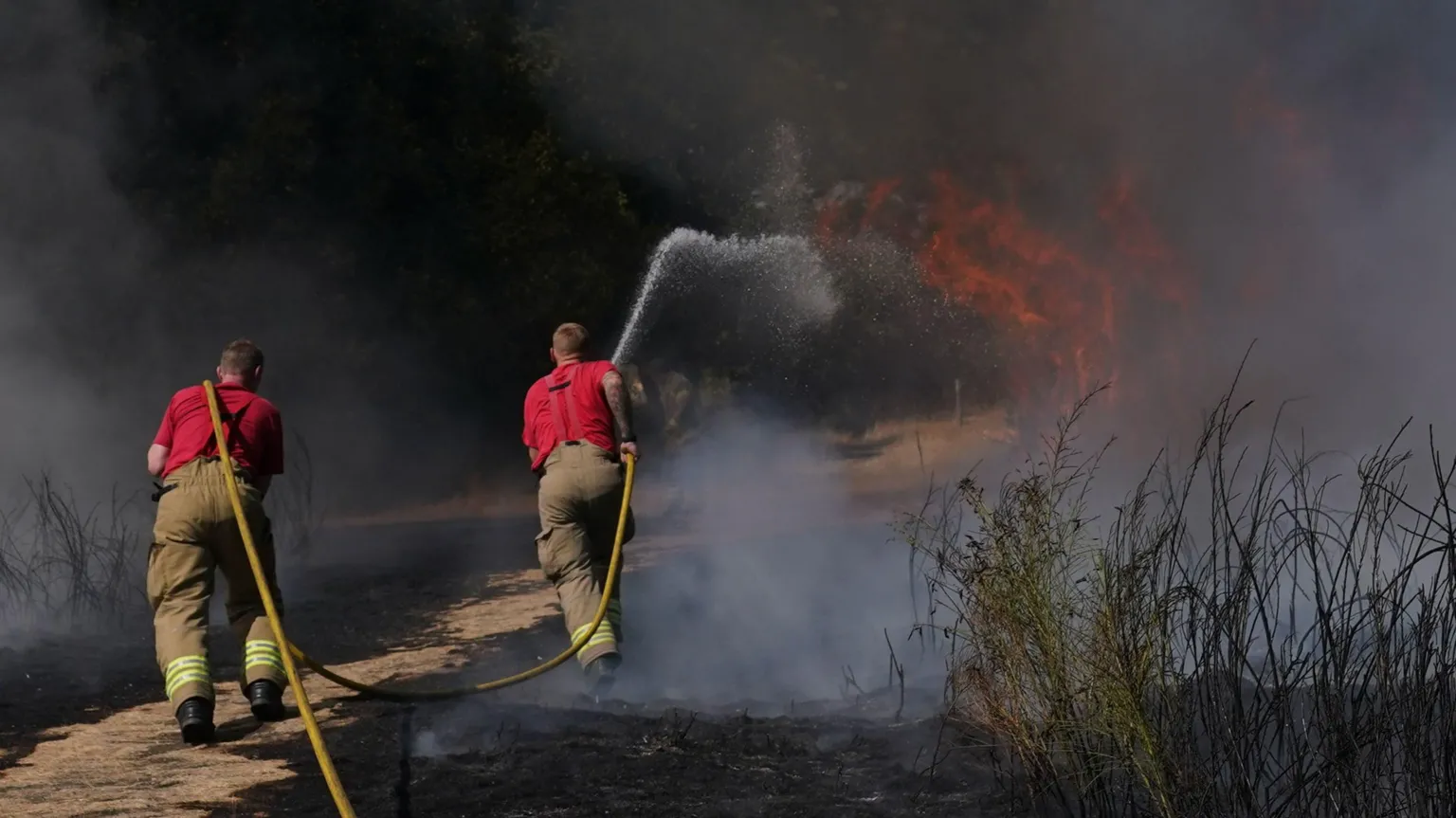
Traditionally, this requires firefighting personnel to remain on the ground for long periods, manually applying water and controlling flare-ups. This is extremely manpower-intensive, physically exhausting, and costly.
The Mobile Fire Fighting Assembly can take over much of this workload by operating as a fixed or semi-mobile suppression unit. This allows personnel to focus on more strategic and high-priority tasks rather than standing for hours applying water manually.
Eliminating Heavy Labour: Hose Retrieval, Reeling, and Cleanup
In many firefighting operations, one of the most physically demanding tasks is not deploying hoses, but retrieving them after the mission. Crews often spend large amounts of time reeling in heavy hoses, collecting equipment scattered across terrain, and transporting wet and damaged hose lines back to vehicles.
The Mobile Fire Fighting Assembly is designed to reduce this burden significantly. Because the hose reel is integrated into the system, the helicopter can retrieve the unit efficiently and recover the hose with far less manual labour. This reduces fatigue, saves time, improves safety, and prevents hoses from being left behind in the field.
Rapid relocation and easy repositioning
Wildfires are dynamic. Fire lines shift quickly, wind changes direction, and tactical priorities can change within minutes. If the Mobile Fire Fighting Assembly needs to be moved, the helicopter can pick it up, reel in the hose, relocate the system, and redeploy it quickly.
If only minor adjustments are needed, the unit can also be repositioned with the hose still deployed.
Reusable and cost-saving across multiple missions
The Mobile Fire Fighting Assembly is designed as a reusable operational tool that can be deployed repeatedly across multiple missions. Reducing the need for ground crew and simplifying recovery leads to direct cost savings through reduced manpower requirements, reduced equipment loss, faster redeployment, and less time spent on post-mission cleanup.
Over the course of a wildfire season, these improvements can represent significant savings while increasing operational readiness and safety.
Multi-use applications beyond wildfire response
Although designed for wildfire suppression, the Mobile Fire Fighting Assembly also supports multiple emergency response scenarios such as emergency water transport in remote areas, flood mitigation and water diversion, industrial firefighting support, emergency cooling operations, and coastal or island firefighting missions.
The MFFA is not only a firefighting tool — it is a rapid-deploy water delivery platform for multiple emergency scenarios.
Conclusion
The Mobile Fire Fighting Assembly (MFFA) represents a major improvement in helicopter-supported wildfire suppression. By eliminating the need for ground crew, reducing heavy hose handling, enabling continuous water delivery, and supporting post-fire operations, the MFFA increases safety and efficiency while reducing manpower demand and operational cost.
In a future where wildfire risk continues to increase, emergency services require solutions that improve speed, flexibility, and resource efficiency. The Mobile Fire Fighting Assembly is built to meet that challenge.
Want to learn more about the Mobile Fire Fighting Assembly (MFFA)?
Contact Vest Aero Tech for product information, pilot deployment opportunities, and demonstrations.
📧 Email: jacob.haram@vestaerotech.no
📞 Phone: +47 979 55 101